AlUla International Airport (ULH, OEAO) is an international airport serving the Al-Ula governorate in the Medina Province of Saudi Arabia, supporting access to the region’s major tourism destinations. The airport began operations on 31 October 2011 under the name “Prince Abdul majeed bin Abdulaziz Domestic Airport,” when the first flight from Riyadh operated by Saudia. It is described as the closest airport to the pre-Islamic archaeological site of Hegra and to Al-Ula Heritage Village. It has also been described as the first airport in Saudi Arabia specifically designed to serve people coming to the region for visiting purposes, positioning aviation as a tool for cultural access, not only transport.
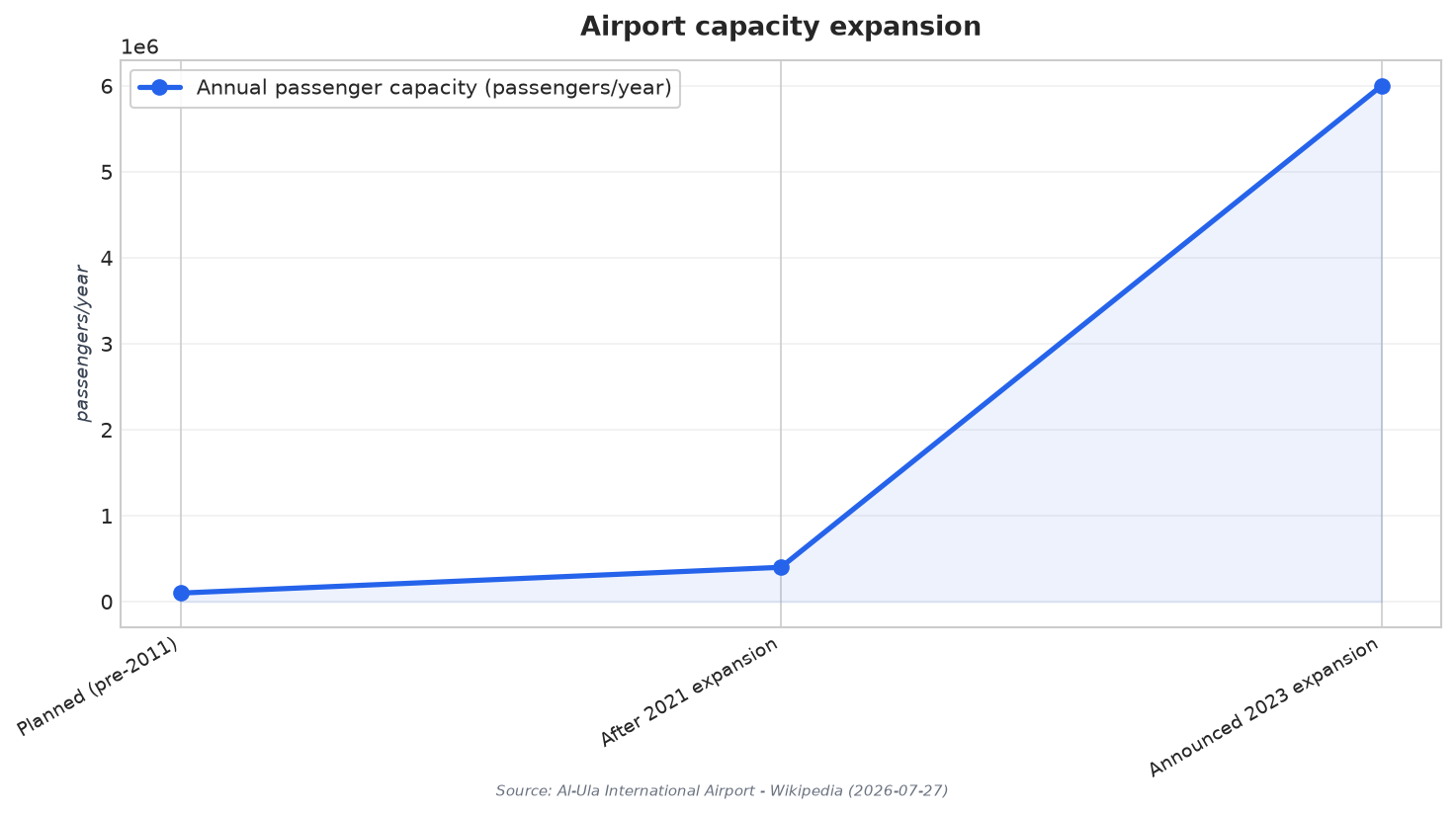
The step-change came in 2021, when Saudi Arabia’s General Authority of Civil Aviation approved the landing of international flights at the airport. In the same period, reported annual capacity increased from a planned 100,000 passengers per year to 400,000 annual passengers after the 2021 expansion. The Saudi Press Agency also reported that the airport’s area increased to 2.4 million square meters, and after that expansion it was officially renamed “Al-Ula International Airport.” Together, these changes frame the AlUla International Airport expansion as more than a terminal upgrade: it connects a heritage-led destination to international travel patterns while increasing the room to handle tourism and local demand.
From Access to Scale: Designing Aviation Around Heritage Demand
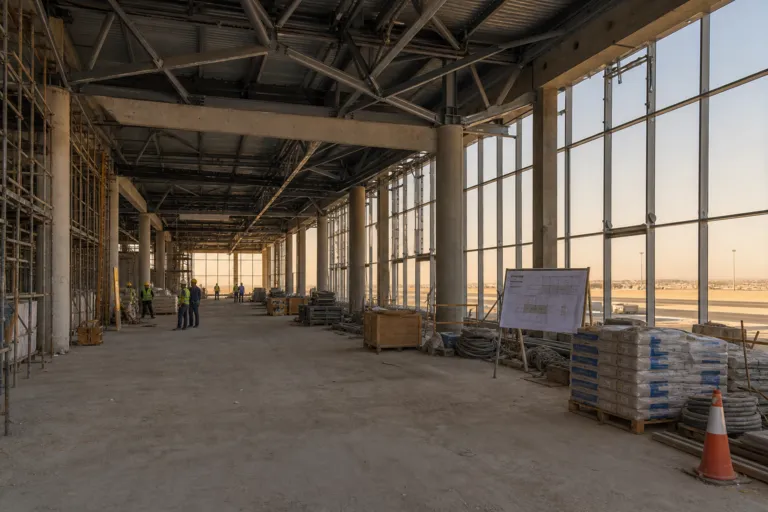
In October 2023, the Royal Commission for Al-Ula announced a new expansion of the airport alongside new designs. That plan targets a further increase in capacity from 400,000 to 6 million passengers every year, and it positions the airport to serve as a logistics hub in Saudi Arabia’s northwest. The destination strategy around it is explicitly heritage-driven. AlUla is an ancient oasis city in northwest Saudi Arabia and home to Hegra, Saudi Arabia’s first UNESCO World Heritage Site, and sources describe the region as containing 200,000 years of human heritage. A Vision 2030-focused overview adds that the masterplan includes luxury resorts, an arts district, cultural institutions, nature reserves, and a regional airport capable of handling international flights.
Aviation upgrades are also reaching beyond scheduled commercial services into premium and specialized travel segments. In 2025, Alliance Aviation inaugurated Saudi Arabia’s first purpose-built general aviation hangar and Fixed Base Operation (FBO) facility at AlUla International Airport, developed in collaboration with the Royal Commission for AlUla (RCU). The same source links the facility to Vision 2030 and states an overarching goal of attracting two million visitors annually and generating SAR 150 billion in revenue for the Kingdom by 2035. This is presented as part of a broader strategy to establish the city as a model for sustainable tourism and economic growth, with infrastructure designed to match a high-value visitor profile.
Demand-building is also being pushed through digital distribution and regional travel planning. In 2026, AlUla launched a partnership with Wego to integrate discovery and booking of flights, hotels, and tours into a single digital ecosystem, with promotion centered on Hegra and other natural assets. This sits alongside the wider wave of airport expansions across Saudi Arabia aligned with Vision 2030 economic diversification goals, with one example being AlWajh International Airport’s upgrade to a 500,000-passenger threshold. For AlUla, the combined picture is clear: international-flight readiness, a rising capacity roadmap, and new aviation services are being linked directly to heritage tourism development and a growing portfolio of destination experiences.
What changed with the AlUla International Airport expansion in 2021?
What capacity is planned under the new AlUla airport expansion announced in 2023?
Why is AlUla International Airport important for heritage tourism?
What new general aviation facility opened at AlUla International Airport?
How is AlUla using partnerships to boost tourism access in 2026?