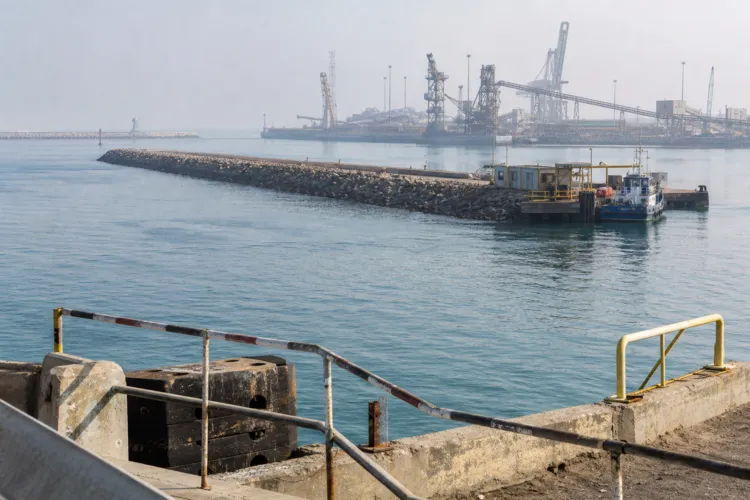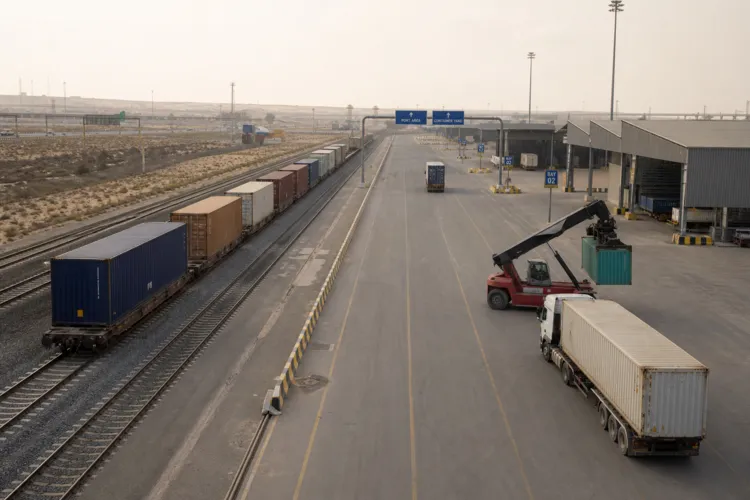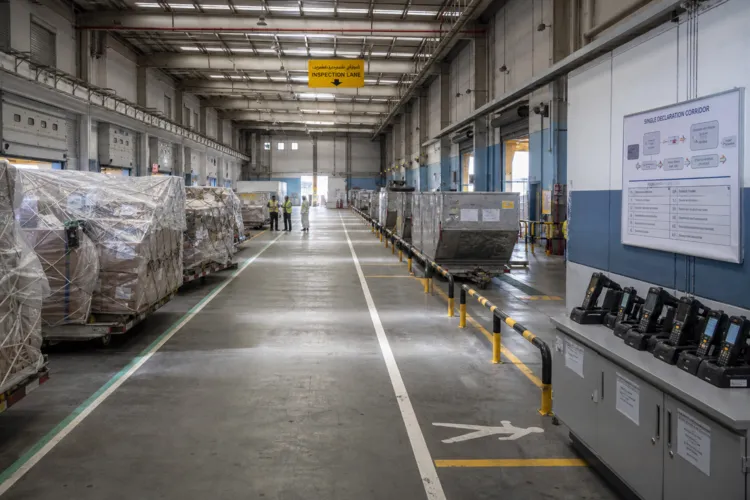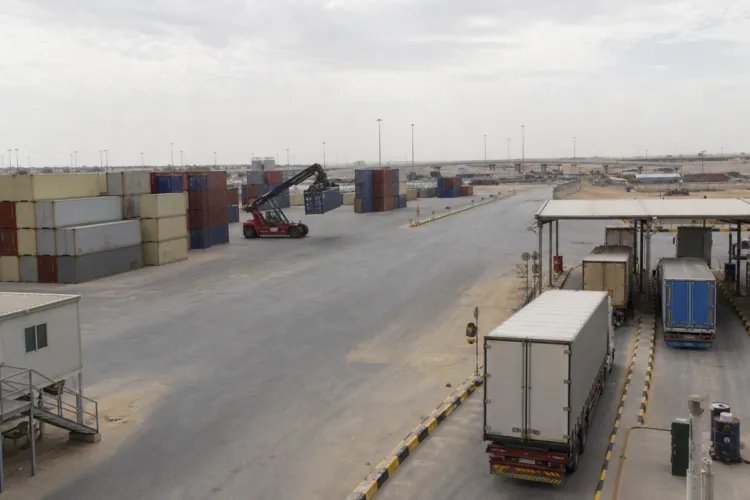
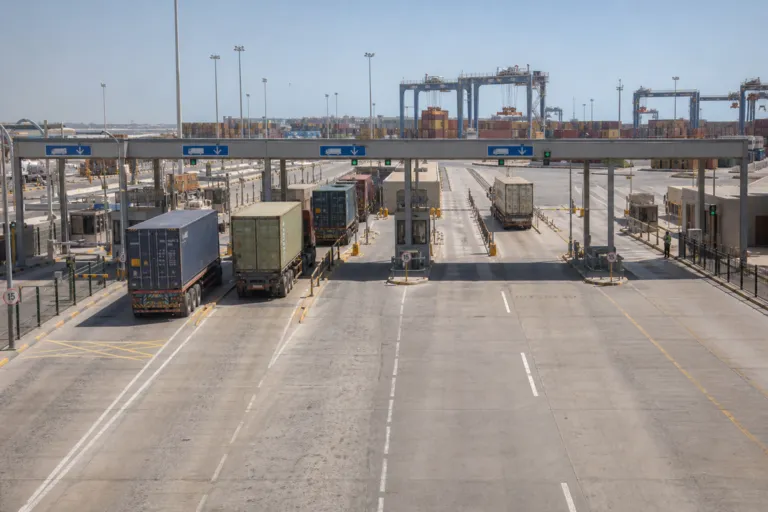
Jeddah Islamic Port has become a pressure point for Gulf logistics in recent weeks as cargo was redirected through Saudi Arabia’s land bridge routes. Multiple sources describe yard utilization running around 90% (including reports of 89% and 90% density), and link that level of crowding to a 20% to 25% drop in terminal productivity. The impacts are visible outside the fence line too. Truck queues have been reported at 5 to 6 kilometres, with some trucks waiting up to three days just to enter the facility. Inside the system, brokers and forwarders have reported container release delays measured in weeks, including six to eight weeks in the worst cases.
The causes are not limited to one shock. Reporting points to Red Sea-related diversions and land bridge routing as key drivers, while The Loadstar and MarineRadar also describe seasonal pressure tied to the Hajj period adding extra demand. As more cargo intended for destinations beyond Jeddah arrived, pressure spread across the wider logistics ecosystem. Operational delays intensified across the port area, and administrative services tied to customs clearance and cargo release were described as being overrun. Even when vessels berth, the real bottleneck can shift to yard dwell time, gate processing, and the availability of trucking on corridors such as Jeddah–Riyadh.
Why Truck Appointments and Gate Discipline Matter at High Yard Density
At high yard density, the gate becomes a control point, and unmanaged arrivals can amplify congestion rather than relieve it. This is where the Jeddah port truck appointment system congestion topic becomes practical: appointments are a way to smooth inbound and outbound peaks when productivity is already down by 20% to 25%. Sources describe the Fasah gate-pass system as feeling strain, while also noting that port operations may offer no concessions for missed slots caused by congestion itself. In that environment, a tighter appointment regime only works if it is paired with better readiness: submit customs declarations via Fasah before the vessel arrives, and pre-book trucking capacity so there is no gap between customs release and container collection.
Policy changes are also reshaping behavior and should be built into appointment planning. Mawani introduced a requirement for in-transit cargo to depart Saudi ports within 15 days of arrival, with longstanding penalties applied, and carriers responsible for monitoring compliance. Multiple reports say most major carriers paused or stopped accepting in-transit bookings through Jeddah, and some omitted Jeddah from schedules entirely. At the same time, authorities may discharge containers elsewhere when the final bill of lading destination is not Jeddah, as they work to reduce pressure on terminal operations. For shippers and forwarders, truck appointment rules must therefore align with carrier acceptance policies and destination documentation decisions.
Planning alternatives can reduce exposure while gate processes recover. Guidance in the sources suggests modelling different routings shipment by shipment, including comparing Jeddah with Dammam (King Abdulaziz Port) for Eastern Province cargo, since Dammam is described as generally experiencing lower congestion than Jeddah. Forwarders have also suggested avoiding Red Sea routings during the peak disruption and considering Arabian Sea services such as Salalah, Khor Fakkan, and Sharjah, depending on the trade and final delivery needs. Meanwhile, data services can show a different view depending on the metric: Portcast lists a median vessel waiting time of 0.74 days for Jeddah, while other reporting highlights that yard backlogs and container release delays can still be severe even when offshore waits look modest.
What conditions are being reported at Jeddah Islamic Port during the congestion?
How can a truck appointment approach help with Jeddah’s gate and yard bottlenecks?
What is the 15-day in-transit rule, and how did carriers react?
Why do some metrics show low vessel waiting time while shippers still report long delays?