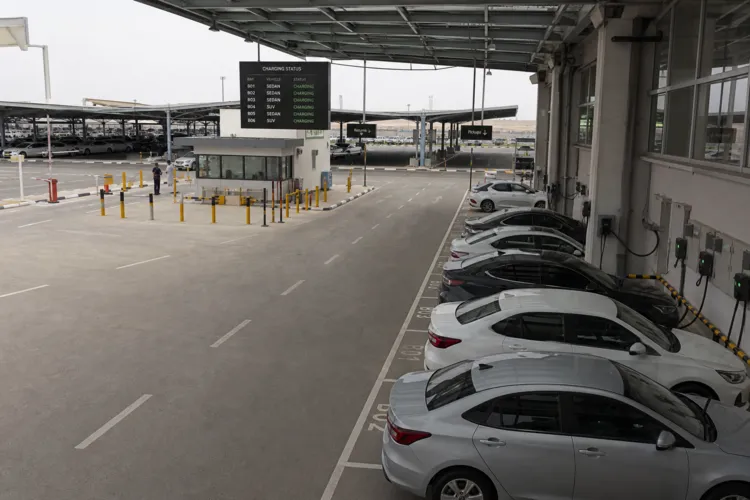
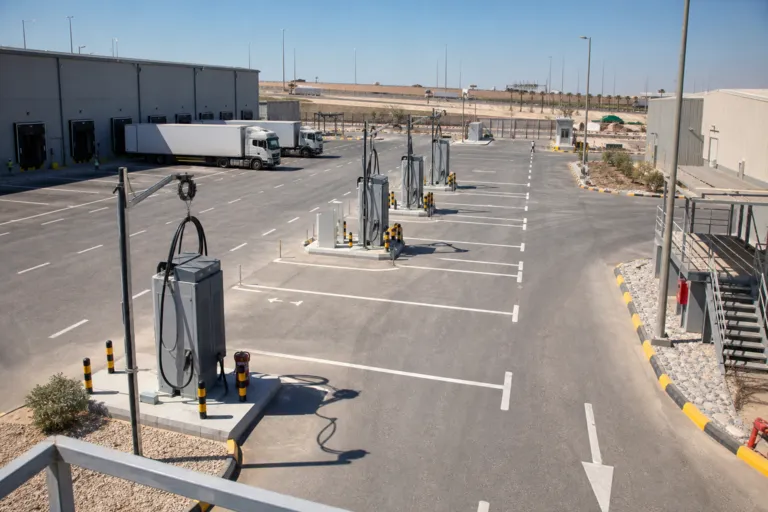
Saudi Arabia’s freight electrification ambitions are rising, but charging access is still a bottleneck for fleet operators. Multiple market studies point to limited infrastructure and range anxiety, including a figure of about 1,200 public charging stations in the Kingdom. Another cited benchmark says the country operated 101 charging stations in 2024. Either way, freight planning cannot assume dense, passenger-style coverage. It needs purposeful depot sites, dependable corridor charging, and grid-ready power. The Saudi government is also investing SAR 1.5 billion in electric vehicle infrastructure by 2025, reinforcing that charging expansion is central to market growth.
A corridor-and-depot model starts with where freight actually concentrates. One source describes charging infrastructure development along major logistics corridors connecting Riyadh, Jeddah, Dammam, and emerging economic cities. This matters because medium- and heavy-duty electric trucks already represent 25–30% of electric commercial vehicle MRO demand, serving logistics corridors and construction material transport. Corridor charging is also tied to real coverage gaps. Reuters reporting cited in a KSA powertrain market summary notes there were no chargers installed on the 900-kilometre Riyadh–Mecca corridor, a key axis for passenger and freight flows. In practice, that kind of gap turns electrification into a dispatch risk.
Depot Charging First, Then Corridor Reliability
A Saudi electric truck charging depot works best when it is designed as a logistics asset, not a retail convenience point. The Megawatt Charging System (MCS) market report defines MCS as charging capacities exceeding 1 MW, typically operating at 1,000V–1,500V DC, and aimed at heavy-duty vehicles including trucks, buses, and mining equipment. In 2026, the report places standard-grade MCS unit pricing at USD 150,000–250,000 per connector, while also estimating that volume procurement for large depots could reduce per-unit costs by 20–30% by 2030. For fleets, that makes centralized depots a logical place to start structured procurement and scale utilization.
Grid readiness is the make-or-break constraint for both depots and corridors. One market analysis flags high-traffic freight corridors and remote mining sites as a critical bottleneck, noting transformer capacity and substation upgrades can require lead times of 18–36 months. The same report adds that SASO and SEC compliance can add 6–12 months to market entry timelines for new MCS vendors. At the system level, Saudi Arabia’s electricity capacity is cited at 83.5 GW, and the powertrain report stresses that adding fast-charging hubs and high-power truck chargers requires grid reinforcements and smarter load management to avoid exacerbating peak-load challenges.
Finally, infrastructure planning should follow fleet economics and operational support, not just charger counts. The electric commercial vehicle MRO report estimates MRO expenditure per vehicle per year at USD 8,000–14,000 for heavy-duty electric trucks and buses, compared with approximately USD 6,000–9,000 for equivalent diesel vehicles, reflecting high-voltage diagnostics, specialized labor, and software subscriptions. That makes uptime and serviceability part of charging strategy. The MCS report also warns that limited availability of certified MCS technicians can raise lifecycle costs by 15–25% compared to mature EV charging segments. Pairing depot buildouts with service ecosystems, and then extending corridor charging to close high-impact gaps, aligns with the market’s push toward partnerships and structured procurement.
How many public EV charging stations are cited for Saudi Arabia?
What is missing on the Riyadh–Mecca freight and passenger corridor?
What power levels define Megawatt Charging System equipment for trucks?
What timeline risks affect building a Saudi electric truck charging depot with MCS?
What spending has been cited for Saudi EV infrastructure support?