Inside the Saudia 191 aircraft order Vision 2030 story is a single idea: capacity is not just about airplanes. It is about planning, people, and support systems that can absorb growth. Saudia Group Director General Ibrahim Al-Omar linked fleet modernization and growth to “clear market insight, network requirements, and alignment with national priorities under Saudi Vision 2030,” according to Aviation Week. He also tied the plan to operational readiness. He said each new aircraft must be supported by “the required operational and maintenance capabilities.”
The near-term delivery cadence in sources is specific. Aviation Week reported that a delivery schedule revealed May 30 includes Airbus A321neos. The same report said Saudia would receive 12 new aircraft by year-end. In parallel, Reuters reported on Feb. 5 that Saudia was in early talks with Boeing and Airbus to buy at least 150 narrowbody and widebody jets, citing Bloomberg News and people familiar with the matter. Reuters added it could not immediately verify the report. Together, these details show both immediate capacity additions and a much larger pipeline under discussion.
Fleet capability also matters to how capacity gets used. Aviation Week said Saudia reached a milestone as the first airline in the Middle East and Africa to operate the A321XLR, described as Airbus’s newest extra-long-range, single-aisle aircraft. That matters because network requirements are explicitly part of Al-Omar’s framing. The sources do not quantify routes or seats. But they do show the airline emphasizing aircraft choice, timing, and the operational systems needed to put each airframe into service reliably.
Vision 2030 Readiness: Training, Maintenance, and Measurable Progress
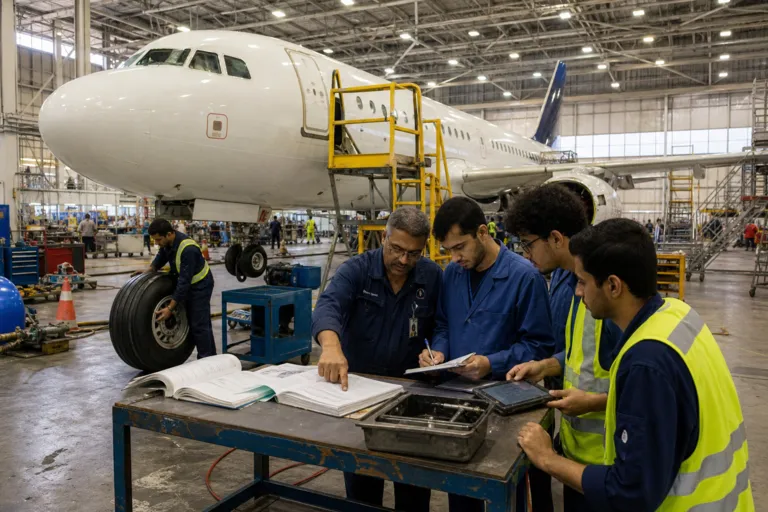
Operational readiness shows up most clearly in workforce actions. Aviation Week reported Saudia has been investing heavily in workforce development alongside its fleet buildup. It said the airline has graduated new cohorts of pilots, cabin crew, and maintenance specialists through training programs aligned with international aviation standards. Al-Omar’s quote was blunt: “Preparing the workforce for fleet expansion is just as important as preparing the aircraft themselves.” This gives the fleet narrative a second track: the human and technical capability to sustain utilization.
The broader Vision 2030 context in sources points to an emphasis on execution and outcomes. Reuters reported that Saudi Arabia’s investment minister, Khalid Al-Falih, said 85% of Vision 2030 targets were complete or on track as of the end of 2024. Separately, Skift reported that on April 15 the PIF approved its 2026-2030 strategy, marking a shift from “rapid growth and acceleration” to “sustained value creation.” Skift also said construction commitments were cut by tens of billions. These signals align with Saudia’s “disciplined approach,” as Aviation Week described it.
Even outside commercial aviation, sources show how Vision 2030 is tied to aviation capability-building through localization and long-cycle planning. FlightGlobal reported that in July 2024 Airbus announced a pact with SAMI covering the establishment of a joint venture named SAAMS to “transfer technology and knowhow of the RSAF A330 MRTT to local companies,” supporting Vision 2030. While this is a defense example, it echoes the same theme Saudia highlights: growth requires systems, training, and support. In that sense, the Saudia 191 aircraft order Vision 2030 narrative is less about a headline number and more about the readiness to turn capacity into sustained operations.
What does the Saudia 191 aircraft order Vision 2030 story emphasize besides buying jets?
How many new aircraft is Saudia expected to receive by year-end, according to the sources?
What did Reuters report about Saudia’s potential largest jet order?
What fleet milestone did Saudia recently achieve with Airbus, per Aviation Week?
What Vision 2030 progress figure is stated in the provided sources?